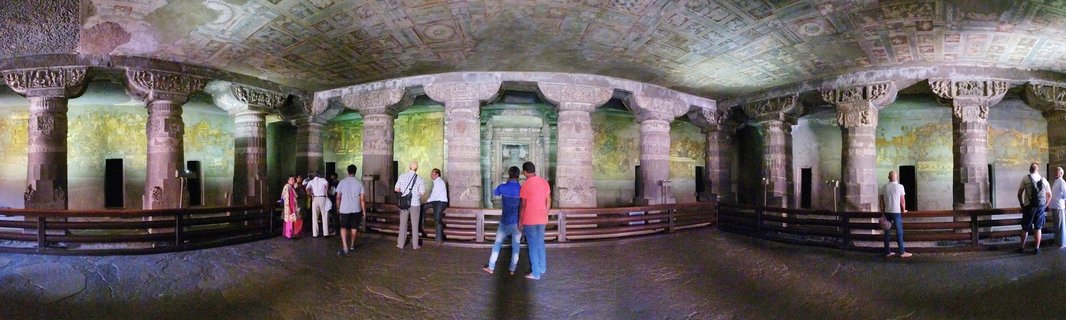
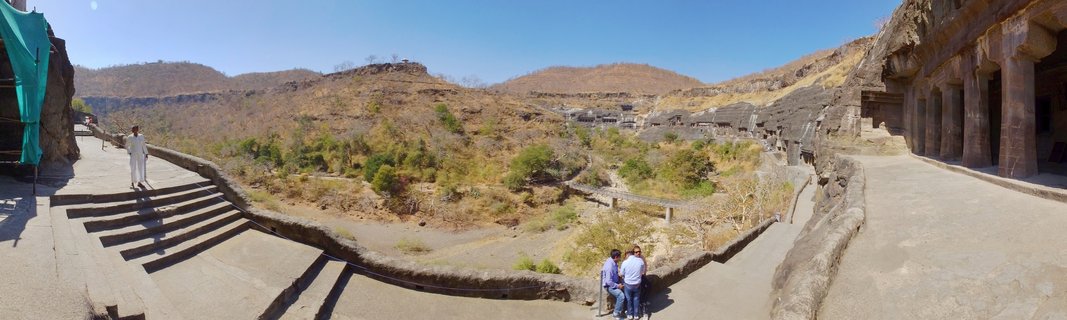
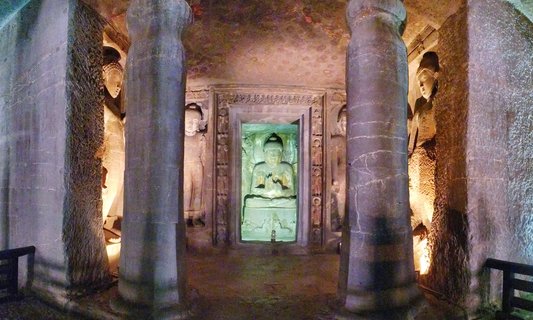
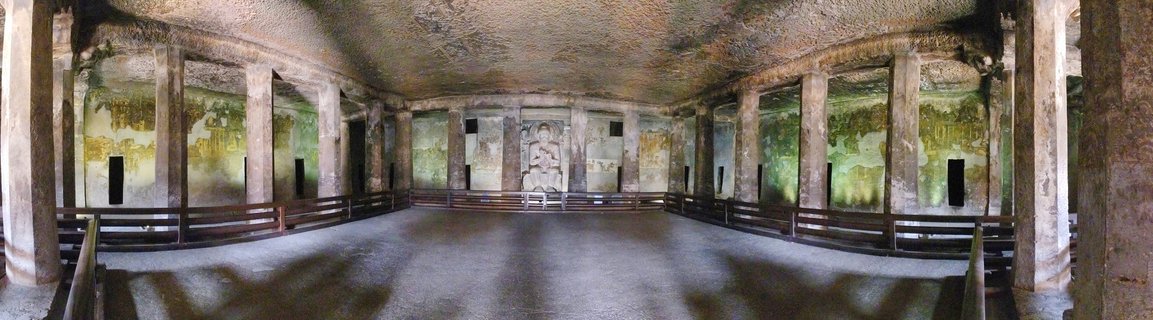
Parinirvana Sculpture of Buddha at Ajanta Caves Cave 26, UNESCO World Heritage Site, Maharashtra, India
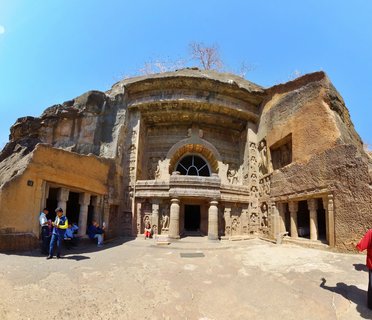
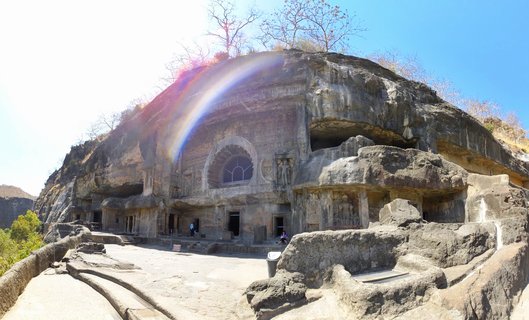
The monumental Parinirvana sculpture of Buddha carved into the rock wall of Cave 26 at the Ajanta Caves, a UNESCO World Heritage Site near Aurangabad, Maharashtra, India. The 5th-century CE rock-cut monument depicts Buddha in his final reclining pose, surrounded by smaller carved figures of mourning disciples.
Read more about this photo
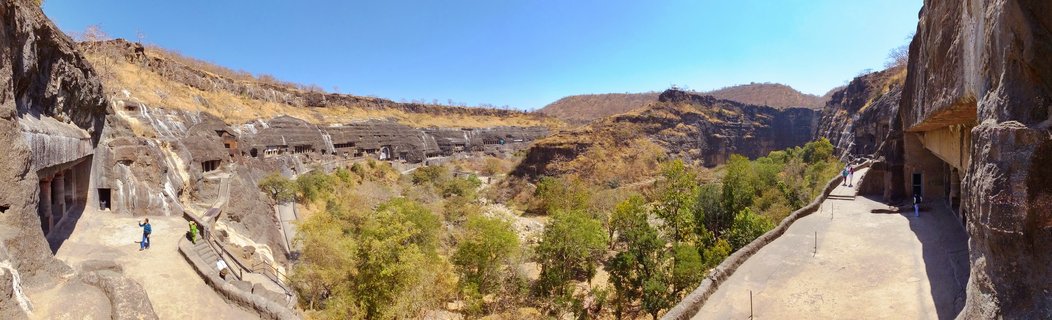
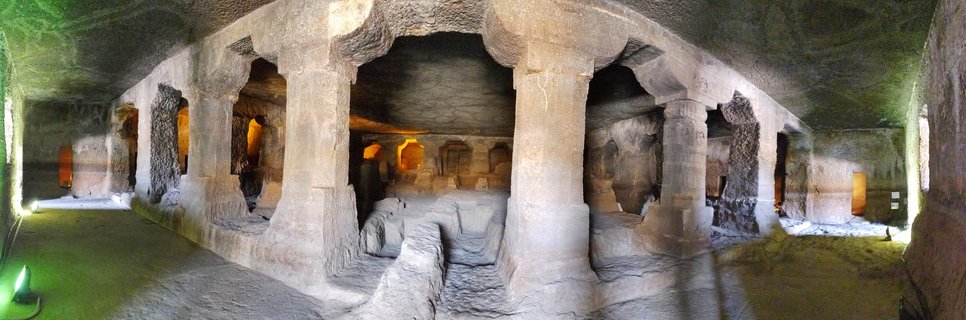
The Ajanta Caves represent one of humanity's greatest achievements in rock-cut architecture and Buddhist art. Carved during the 5th century CE under the Vakataka dynasty, these 30 caves contain some of the finest surviving examples of ancient Indian painting and sculpture.
Cave 26, where this magnificent Parinirvana sculpture resides, was one of the last caves constructed at Ajanta. The reclining Buddha depicts the moment of Buddha's passing into Nirvana, a scene of profound spiritual significance in Buddhist tradition. The sculpture measures over 7 meters in length and demonstrates the sophisticated artistic techniques of ancient Indian craftsmen.
Today, the Ajanta Caves stand as a testament to India's rich Buddhist heritage and continue to attract scholars, pilgrims, and travelers from around the world. The site's remote location in the Sahyadri mountains helped preserve these treasures for over a millennium before their rediscovery in 1819.
Spot a mistake or location error? Let us know!
Photos from the day