Seated Buddha statue inside ancient rock-cut cave temple at Ajanta Caves, Aurangabad, Maharashtra, India
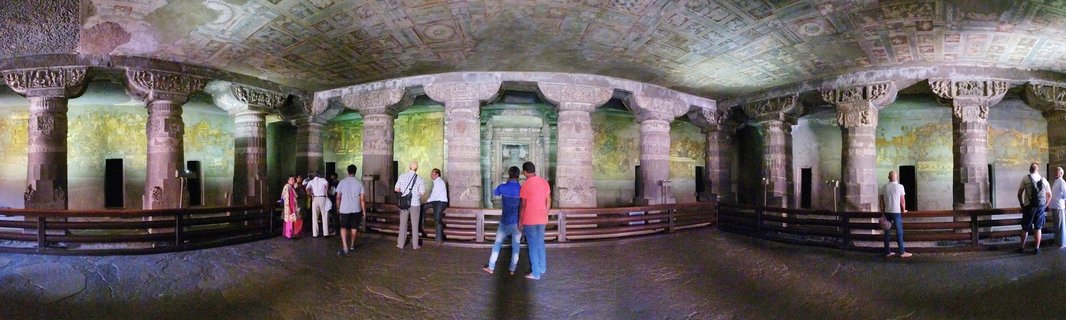
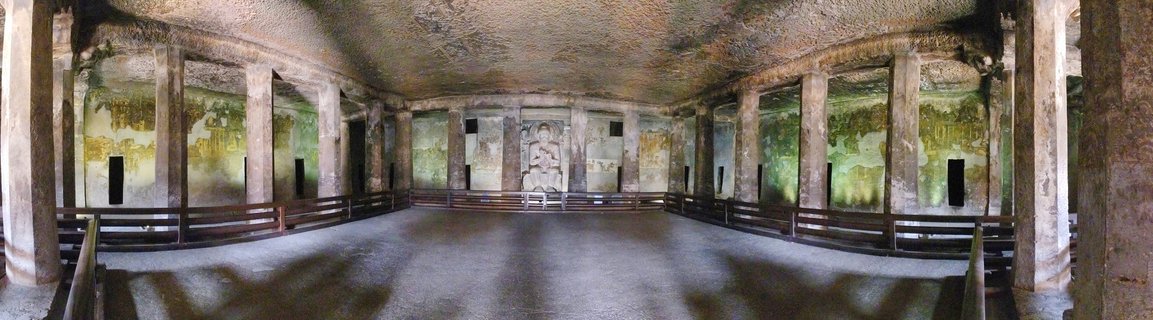
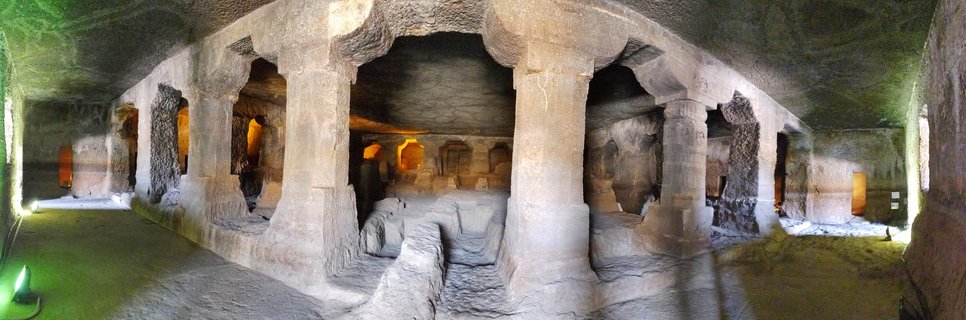
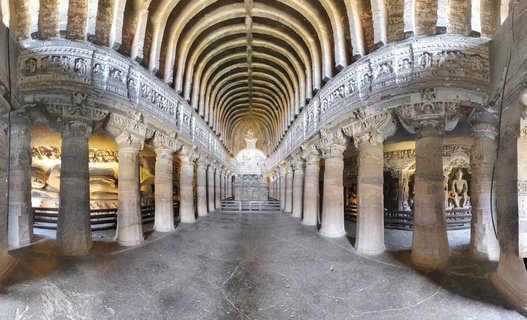
A central seated Buddha statue in dharmachakra mudra is illuminated by artificial uplighting inside Cave 1 of the Ajanta Caves, a UNESCO World Heritage Site near Aurangabad, Maharashtra, India. The 2nd century BCE rock-cut Buddhist monastery features intricately carved stone pillars and multiple Buddha sculptures along the walls.
Read more about this photo
Step into the timeless sanctuary of Ajanta Caves, where ancient Buddhist artisans carved sacred monuments directly into the basalt rock face over 1,500 years ago. The central Buddha sits in eternal meditation, hands forming the dharmachakra mudra—the wheel of dharma—casting a serene presence that has witnessed centuries of devotion.
Dramatic artificial uplighting transforms the cave interior into a cathedral of shadows and golden warmth, highlighting the masterful stone pillars that frame the composition like sentinels of faith. Each carved surface tells stories of enlightenment, with smaller Buddha figures lining the walls in silent communion with the central deity.
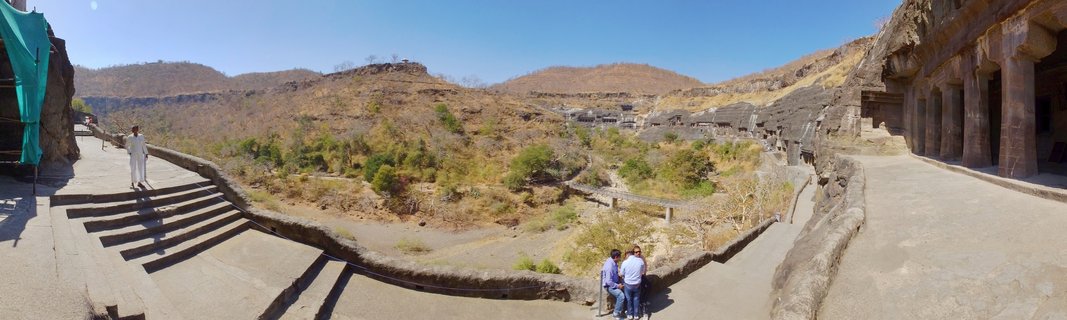
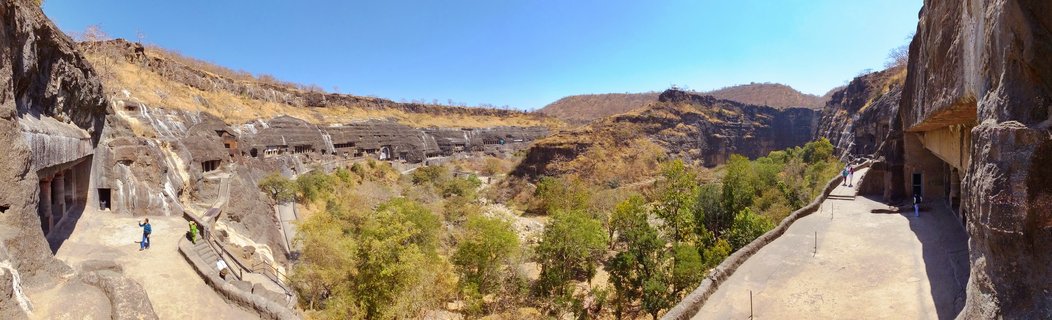
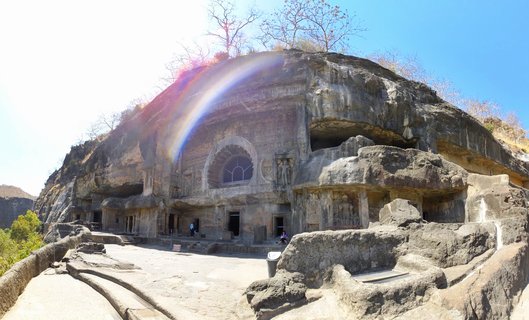
This UNESCO World Heritage Site represents the pinnacle of ancient Indian Buddhist architecture and art, where the boundaries between rock and sculpture dissolve into spiritual transcendence. Visitors standing in this sacred space connect with a living tradition that spans from the 2nd century BCE through the 6th century CE.
Spot a mistake or location error? Let us know!
Photos from the day