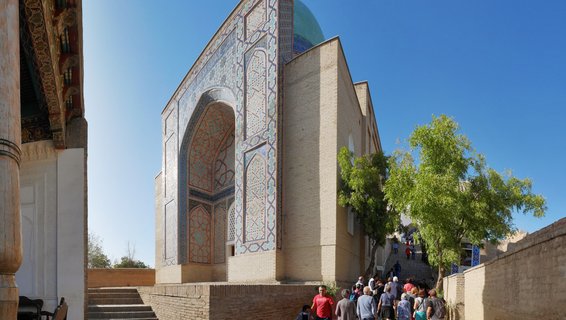
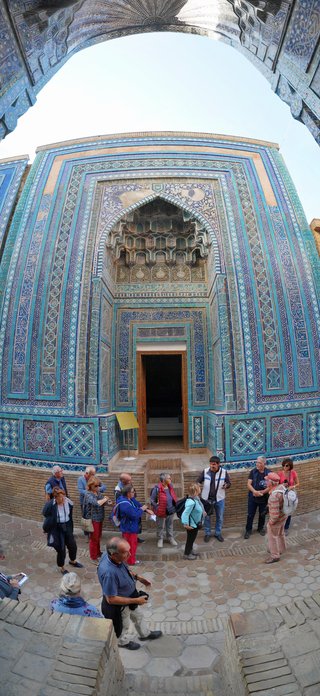
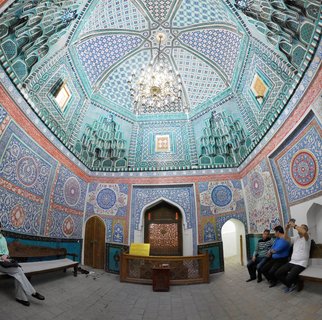
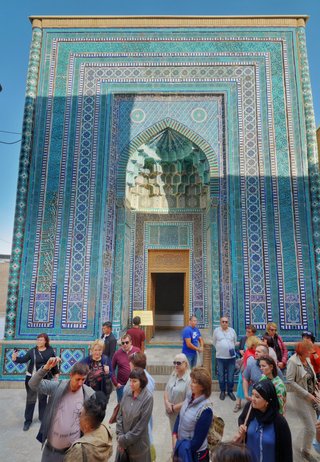
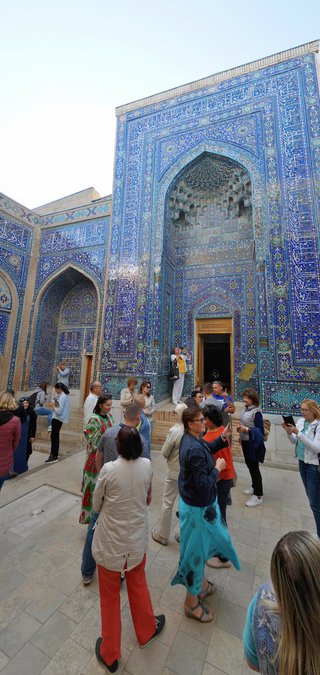
Tourist enters Shah-i-Zinda mausoleum with intricate blue tilework in Samarkand, Uzbekistan
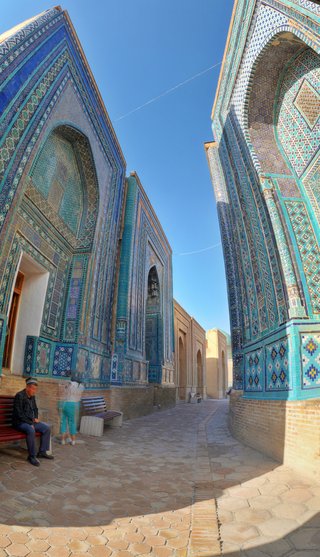
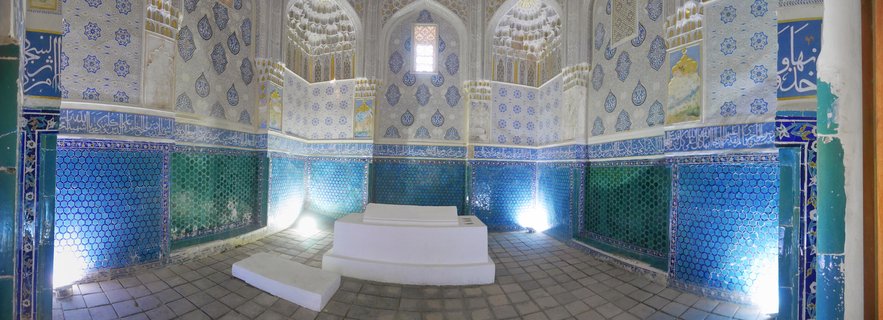
A visitor approaches the ornately decorated entrance of a 14th-century mausoleum at Shah-i-Zinda necropolis in Samarkand, Uzbekistan. The structure features elaborate turquoise and cobalt ceramic tilework with geometric patterns and Arabic calligraphy characteristic of Timurid-era Islamic architecture.
Read more about this photo
The Gateway to Shah-i-Zinda
The entrance rises before visitors like a portal to another century, its surface alive with thousands of hand-cut ceramic tiles arranged in mathematical perfection. Each shade of blue—from deep cobalt to pale turquoise—was chosen by master craftsmen of the Timurid dynasty.
A Living Monument
Shah-i-Zinda, meaning 'The Living King,' remains one of Central Asia's most sacred pilgrimage sites. The necropolis complex houses mausoleums built over seven centuries, each displaying the evolution of Islamic decorative arts along the historic Silk Road.
Spot a mistake or location error? Let us know!
Photos from the day