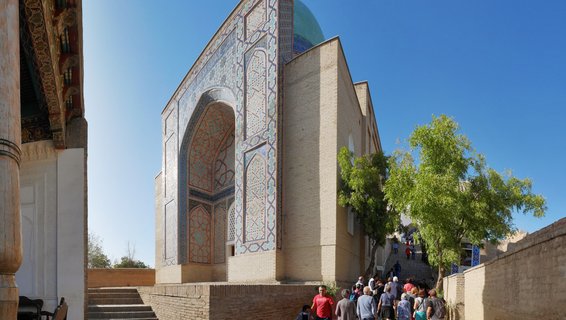
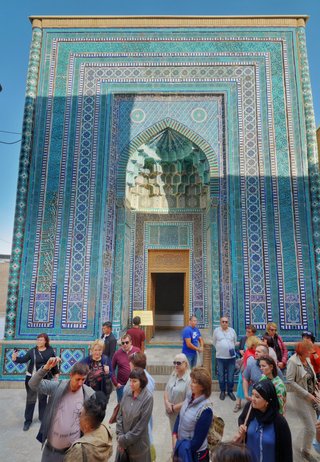
Tourists at Shah-i-Zinda Necropolis Entrance, Samarkand, Uzbekistan
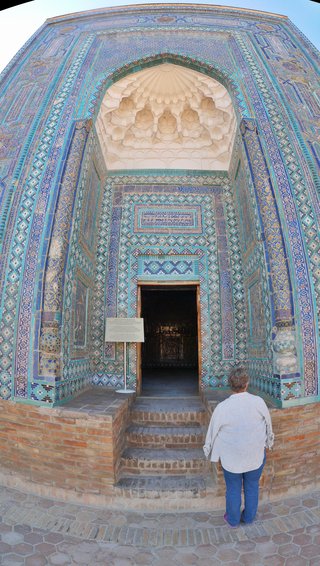
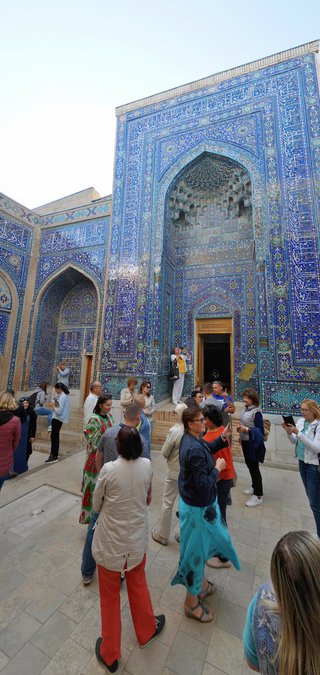
International tourists gather at the ornately tiled entrance of a mausoleum within the Shah-i-Zinda necropolis in Samarkand, Uzbekistan. The 14th-century Timurid architecture features intricate blue mosaic tilework with geometric patterns and Arabic calligraphy.
Read more about this photo
The Shah-i-Zinda complex stands as one of Central Asia's most exquisite examples of Timurid Islamic architecture. Its name meaning 'The Living King' references the legendary grave of Qusam ibn Abbas, a cousin of Prophet Muhammad.
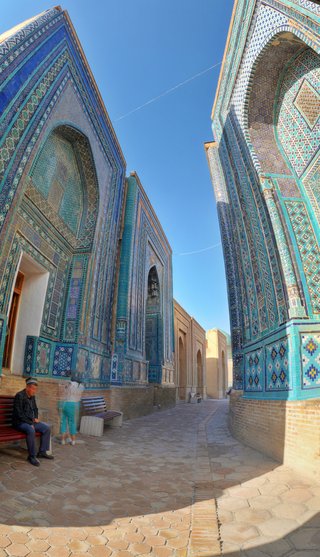
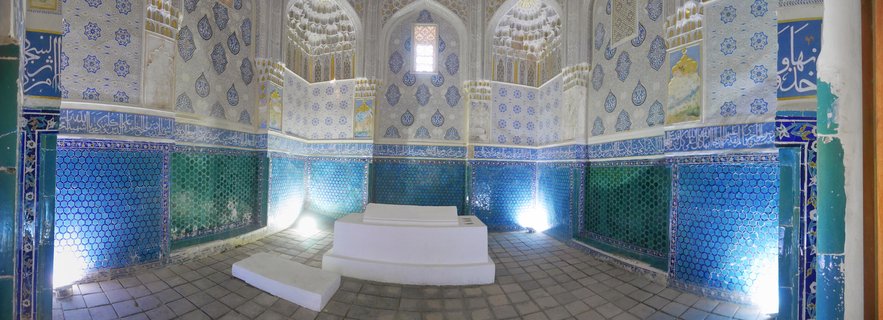
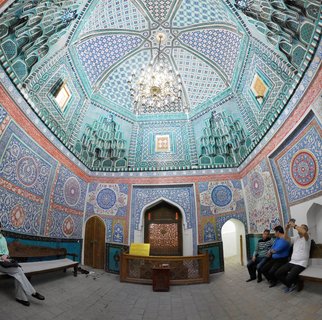
The necropolis developed over centuries, with most surviving structures dating from the 14th and 15th centuries during Timur's empire. Each mausoleum displays distinctive blue, turquoise, and white tilework featuring geometric girih patterns, floral motifs, and Kufic calligraphy.
Today, the narrow avenue of mausoleums attracts visitors tracing the historic Silk Road. The site represents a pilgrimage destination and UNESCO World Heritage treasure showcasing medieval Islamic artistic achievement.
Spot a mistake or location error? Let us know!
Photos from the day