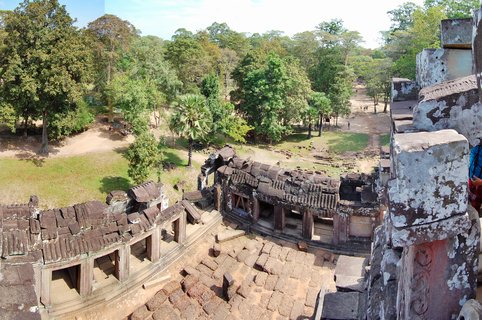
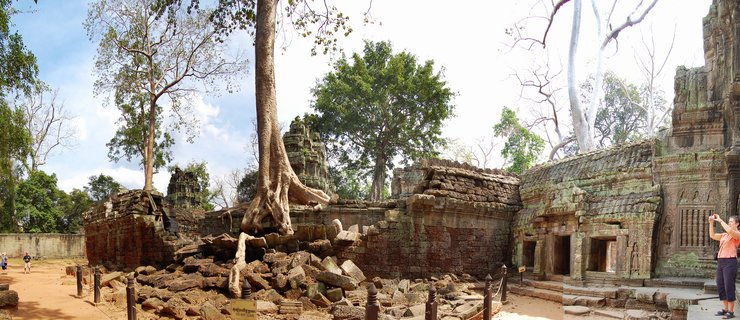
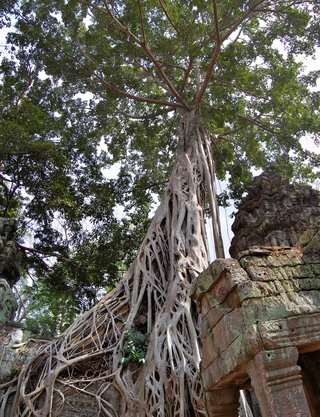
Massive silk-cotton tree roots envelop ancient doorway at Ta Prohm temple, Angkor Archaeological Park, Cambodia
Iconic view of Ta Prohm temple at Angkor Archaeological Park in Siem Reap, Cambodia, where massive silk-cotton tree roots have grown over and through 12th-century Khmer sandstone structures. The temple, built in 1186 CE by King Jayavarman VII, has become one of the most photographed archaeological sites in Southeast Asia.
Read more about this photo
The Temple That Time Forgot
Deep within the Cambodian jungle, where sunlight filters through a canopy of emerald leaves, the ancient temple of Ta Prohm stands as a testament to nature's patient persistence. Built in 1186 CE by the Khmer King Jayavarman VII as a Buddhist monastery and university, this sacred complex has spent the last eight centuries in a slow, silent dance with the surrounding rainforest.
Where Stone Meets Root
The most striking feature of Ta Prohm is the extraordinary symbiosis between architecture and nature. Massive silk-cotton trees and strangler figs have sent their pale, sinuous roots cascading over weathered sandstone walls, enveloping doorways, and threading through ancient corridors.
A Living Heritage Site
Today, Ta Prohm remains one of the most evocative temples in the Angkor Archaeological Park, a UNESCO World Heritage Site that draws millions of visitors annually. Unlike many neighboring temples that underwent extensive restoration, Ta Prohm was deliberately preserved in its discovered state.
Spot a mistake or location error? Let us know!
Photos from the day