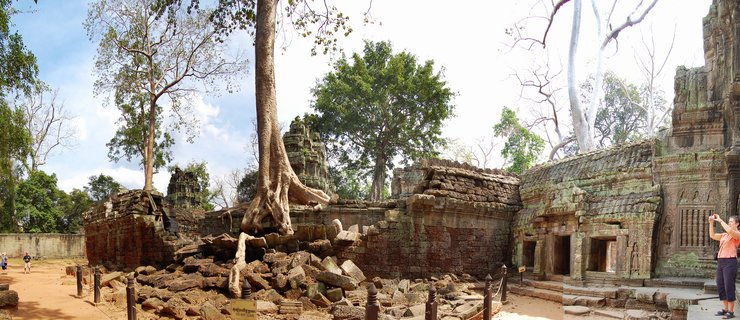
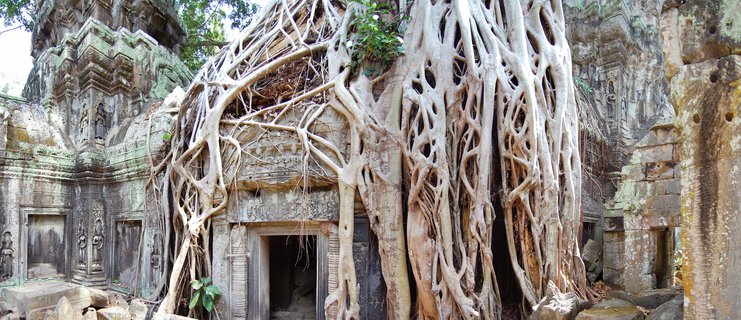
Ancient silk-cotton tree roots engulf Ta Prohm temple ruins at Angkor Archaeological Park, Cambodia
Massive silk-cotton tree roots cascade over weathered sandstone blocks at Ta Prohm temple in Angkor Archaeological Park, Cambodia. The 12th-century Khmer ruins demonstrate nature's gradual reclamation of the ancient Buddhist monastery.
Read more about this photo
The Living Temple
Sunlight filters through the dense jungle canopy above, illuminating the extraordinary spectacle where nature and architecture have become one. Massive silk-cotton tree roots, thick as ancient serpents, cascade down the weathered sandstone walls of Ta Prohm temple in an intricate web that has taken centuries to weave.
Stone Meets Root
The 12th-century Khmer builders could never have imagined their sacred monastery would one day serve as a living scaffold for the jungle's relentless advance. Moss and lichen carpet the gray stone blocks, their surfaces softened by time and tropical humidity. Each root tells a story of patient conquest, finding purchase in the smallest crevices before swelling to monumental proportions.
Angkor's Timeless Dance
This iconic scene from Cambodia's Angkor Archaeological Park has captivated visitors since French explorers documented the temple's jungle-shrouded ruins in the 19th century. Today, conservationists carefully balance preservation with the natural processes that make Ta Prohm one of the world's most photographed archaeological sites.
Spot a mistake or location error? Let us know!
Photos from the day