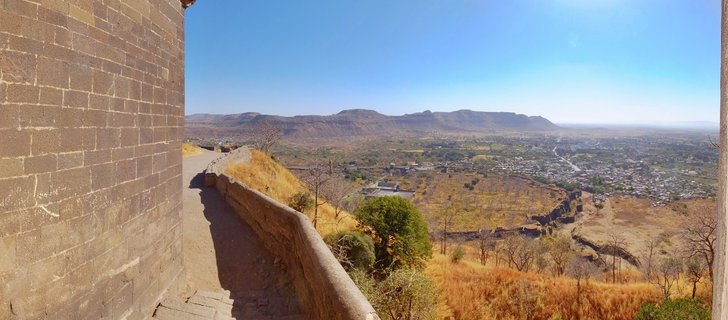
Ancient Buddhist Rock-Cut Caves in Aurangabad, India, Carved into Volcanic Basalt Cliff Face
The ancient Aurangabad Caves, Buddhist rock-cut monuments carved from basalt rock during the 6th-7th century CE, featuring pillared verandas, stone steps, and intricate lattice windows under clear blue skies.
Read more about this photo
Ancient Craftsmanship
These remarkable Buddhist caves were hand-carved from solid volcanic basalt rock over 1,500 years ago during the reign of the Vakataka dynasty. Master artisans chiseled away tons of stone to create these monastic retreats.
Architectural Heritage
The caves showcase the evolution of Buddhist architecture in the Deccan region, with their distinctive pillared verandas, carved stone steps, and decorative lattice windows (jaalis) that demonstrate sophisticated understanding of light and ventilation.
UNESCO World Heritage Context
Located near the more famous Ajanta and Ellora Caves, the Aurangabad Caves represent an important link in India's Buddhist heritage trail, offering visitors a less crowded glimpse into ancient monastic life.
Spot a mistake or location error? Let us know!
Photos from the day