Historic moat and stone fortifications at Hue Imperial City UNESCO World Heritage Site, Vietnam
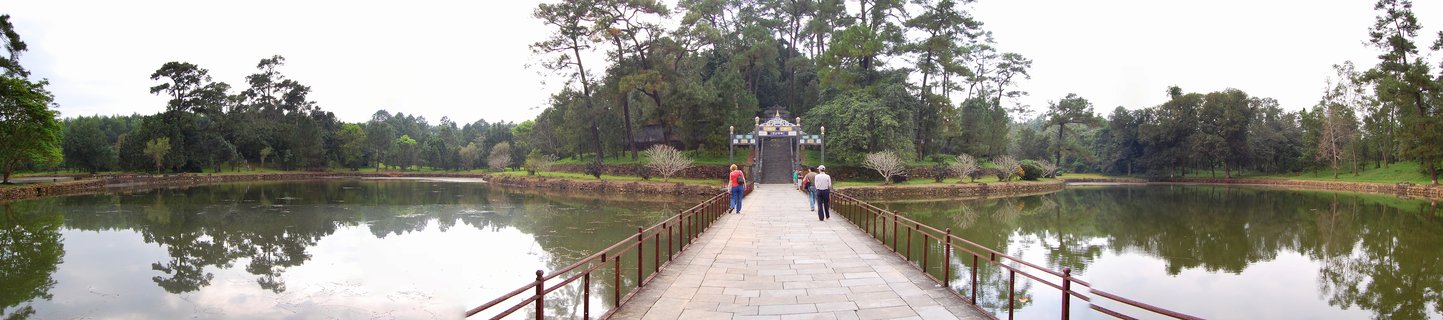
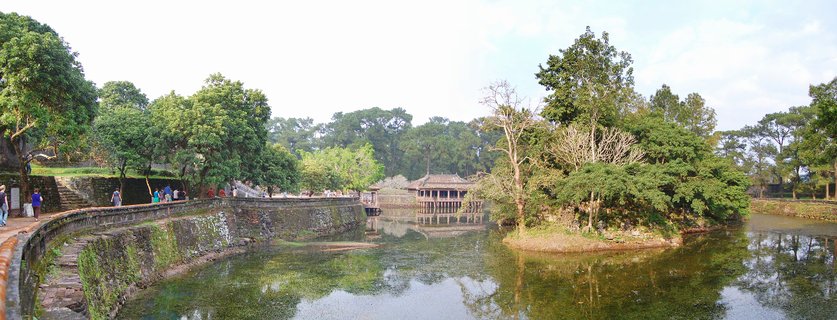
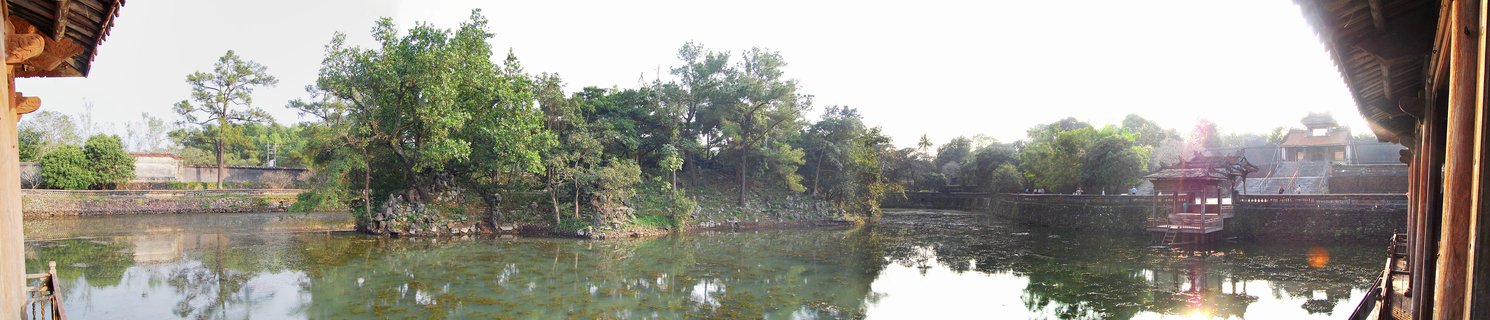
The historic moat and stone fortification walls of Hue Imperial City, a UNESCO World Heritage Site in central Vietnam. Visitors walk along pathways beside the water-filled defensive canal surrounded by mature trees.
Read more about this photo
The Imperial City of Hue stands as Vietnam's most significant historical monument, a walled fortress and palace inspired by China's Forbidden City. Built in the early 19th century under Emperor Gia Long, the citadel served as the capital of unified Vietnam until 1945.
The elaborate moat system surrounding the Imperial City spans over 2 kilometers and served as the first line of defense against invaders. Stone walls rise from the water's edge, topped with decorative elements that blend Vietnamese and Chinese architectural influences.
Today, the site attracts visitors who walk the pathways alongside the tranquil waters, where lotus flowers bloom in warmer months and white-blossomed trees frame the ancient stonework against the backdrop of one of Southeast Asia's most important cultural heritage sites.
Spot a mistake or location error? Let us know!
Photos from the day